
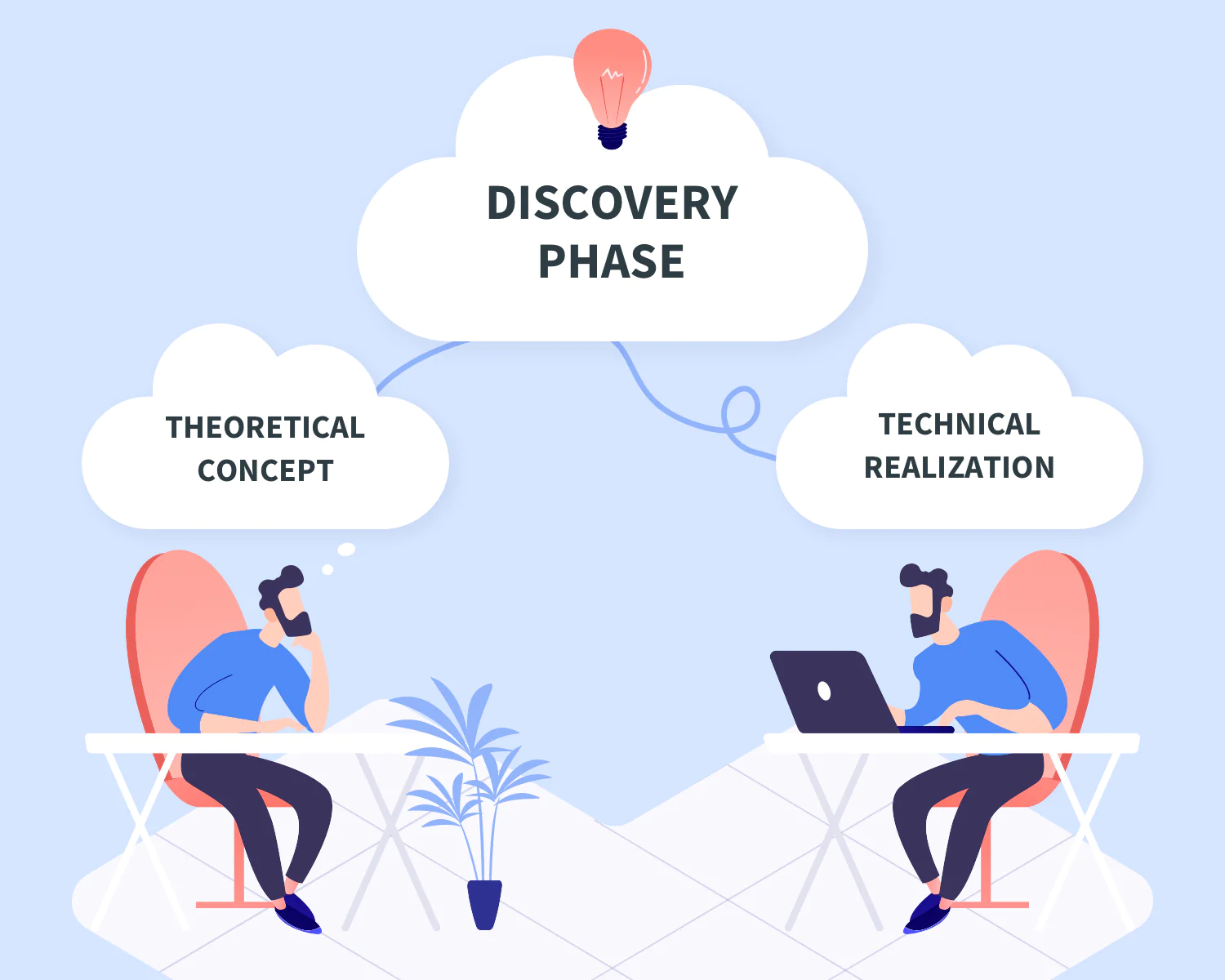
Outsourcing software development always starts with optimism. A clear idea. A capable vendor. A timeline that looks reasonable. Everyone believes things will move fast once coding begins. And that is exactly where many projects quietly go wrong. Not because the engineers are weak. Not because the vendor lacks experience. But because the project jumped straight into development without truly understanding what needed to be built, and why.
This is where the discovery phase proves its value. Especially in outsourced projects.
The hidden risk behind outsourced projects
When companies outsource, they often assume that documents are enough. Requirements, wireframes, maybe a backlog. The rest, they believe, can be figured out during development.
In reality, outsourcing creates a knowledge gap by default.
Your internal team carries years of context. Business logic that was never written down. User behaviors that feel obvious. Constraints learned the hard way. When the project is handed to an external team, all of that context does not travel automatically.
This is where discovery plays a critical role. Discovery is not just about defining features. It is a reverse knowledge transfer process, from client to vendor. A structured effort to move understanding out of people’s heads and into a shared system of thinking.
Without this transfer, outsourced teams are forced to guess. They may guess intelligently, but guesswork still accumulates risk. Small misunderstandings compound over time. What looks like progress in early sprints often hides deeper alignment issues that surface later, when change is far more expensive.

Discovery as a foundation for shared understanding
In outsourced projects, discovery is the phase where both sides slow down to align how they think, not just what they build.
It covers business goals, yes. But more importantly, it uncovers intent. Why certain features matter. Why can some constraints not be violated? Why speed is critical in one area, but stability is non-negotiable in another.
This process creates something many teams underestimate: a shared language. Across different regions, time zones, and cultures, the same word can mean very different things. “Done”, “simple”, “MVP”, even “urgent”. Discovery forces these terms to be discussed, challenged, and defined together.
Instead of fragmented conversations later, the team builds a common mental model early. That shared language becomes the reference point for every design decision, every trade-off, every scope discussion that follows.
Why skipping discovery creates technical debt from day one
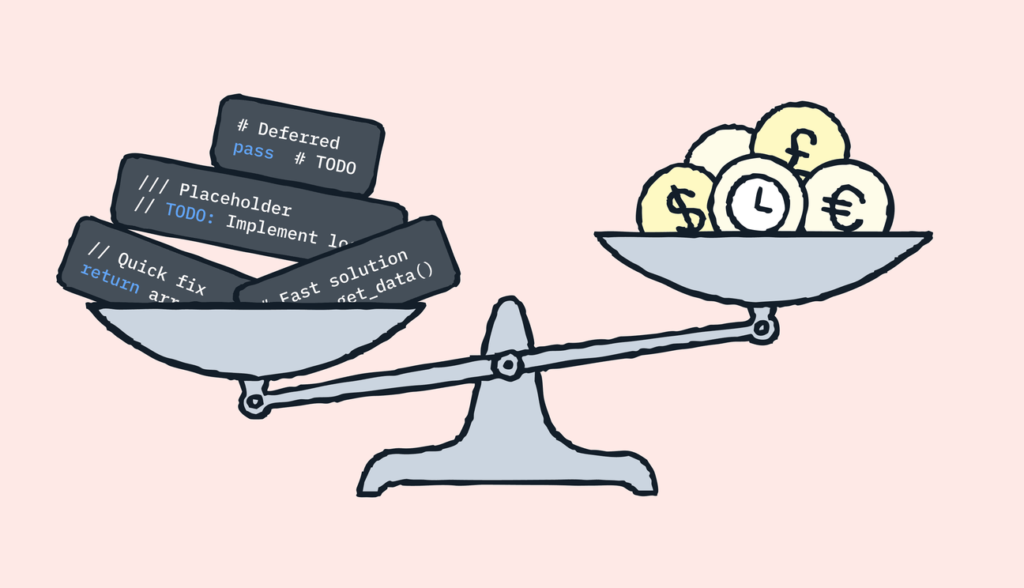
Cost savings from discovery are often discussed, but rarely explained properly. The real issue is not just wasted effort. It is technical debt.
Skipping discovery means decisions are made with incomplete information. Architecture is designed around assumptions. Features are built without fully understanding edge cases. Integrations are treated as simple until they are not.
This is how technical debt accumulates before the first release. In outsourced projects, this debt is even more dangerous. It hides inside codebases, workflows, and delivery processes. Over time, it slows development, increases bug rates, and makes every new feature harder to implement.
Discovery helps reduce this debt early. By clarifying requirements, validating assumptions, and identifying technical risks upfront, discovery prevents teams from locking themselves into fragile solutions. It allows complexity to be addressed deliberately, instead of reactively.
That is where the 30-50% cost savings truly come from. Not from doing less work, but from avoiding expensive corrective work later.
How discovery reduces long-term outsourcing costs
The financial impact of discovery usually appears in three areas.
First, reduced rework. When requirements are aligned early, fewer features need to be rebuilt. Fewer sprint cycles are wasted fixing misunderstandings. In outsourced setups, where context rebuilding is costly, this has a direct impact on the budget.
Second, controlled scope. Discovery forces prioritization. Teams focus on what delivers value now, not what feels nice to have. This keeps MVPs lean and prevents scope from expanding uncontrollably under pressure.
Third, stronger technical foundations. Early technical discovery surfaces integration challenges, performance risks, and security requirements before they turn into production incidents. Fixing these issues early is dramatically cheaper than patching them under live traffic.
Together, these effects compound over time. The longer the product lives, the more value discovery generates.
Why discovery matters even more across regions and cultures
Outsourced projects often span continents. Different working hours. Different communication styles. Different assumptions about responsibility and ownership.
Discovery helps bridge these gaps. By investing time upfront, teams reduce reliance on constant clarification later. Decisions are documented. Rationales are shared. Expectations are made explicit. This is not about process for its own sake. It is about creating clarity in an environment where ambiguity multiplies quickly. A strong discovery phase turns cultural differences from a risk into a manageable variable.
Discovery as a sign of a mature outsourcing partner
Vendors who rush into development often do so to appear fast. Mature partners slow down deliberately.
At PowerGate Software, discovery is treated as a strategic phase, not a sales formality. Across projects in healthcare, fintech, education, and enterprise systems, the pattern is consistent. Projects with solid discovery are calmer. Decisions are easier to defend. Technical debt is lower. Costs stay predictable. Most importantly, trust lasts beyond the first release. Discovery does not eliminate uncertainty. But it makes uncertainty visible. And visible risks can be managed.
Outsourcing succeeds not when code is written quickly, but when understanding is built early. Discovery is where that understanding begins.
About PowerGate Software – leading global software product studio
PowerGate Software is a global software development partner specializing in full-cycle digital solutions. Since 2011, they’ve delivered 200+ projects across healthcare, fintech, education, and more, helping startups and enterprises bring their ideas to life with scalable, high-quality technology. With offices in Australia and the United States, and teams across North America, Europe, and Asia-Pacific, they’re positioned to support clients close to their markets with speed and flexibility. Their services span custom software and mobile/web development to AI, blockchain, cloud platforms, and ERP systems.
- Website: https://powergatesoftware.com/
- Services: https://powergatesoftware.com/services/
Email: us@powergatesoftware.com