
A few years ago, I sat across from a frustrated clinic owner who told me, “We’re great at what we do, but patients just aren’t finding us online.”
They had a website. They had decent reviews. But when I searched their specialty in their city, competitors were everywhere — especially at the top of Google.
That was the day I realized something important: Google Ads for doctors and SEO shouldn’t work separately. They should work together.
If you’re a doctor, clinic owner, or healthcare marketer trying to figure out a practical Google Ads for doctors SEO outline, I’m going to walk you through exactly how I approach it — based on real campaigns I’ve worked on and lessons I learned the hard way.
Why Doctors Need Both Google Ads and SEO
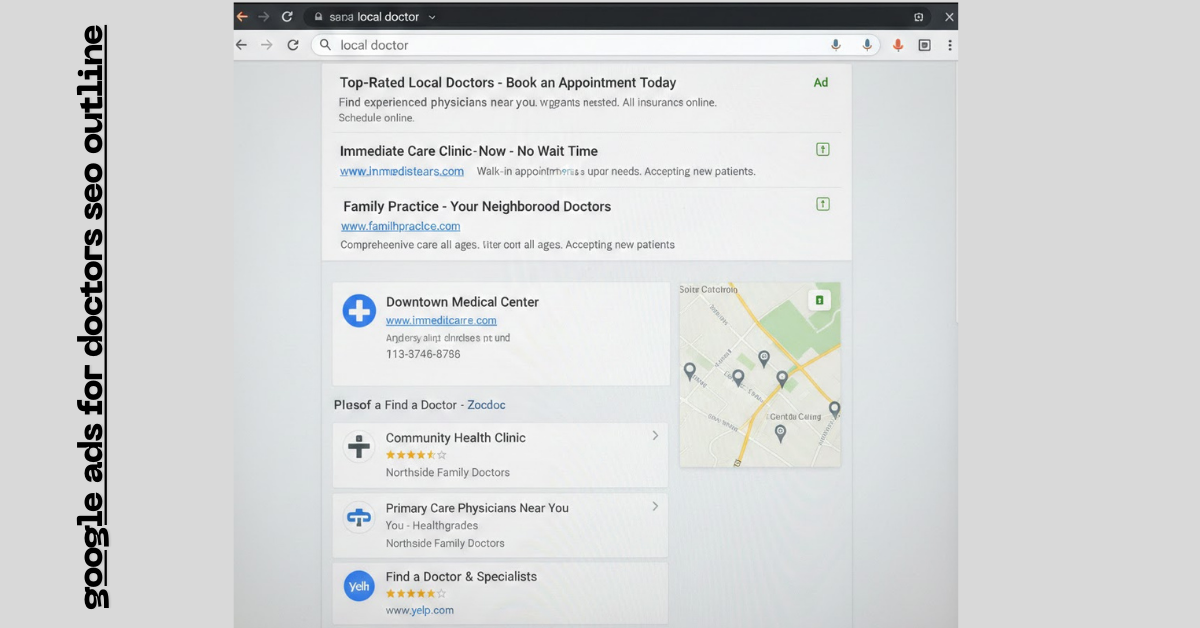
When someone searches “dermatologist near me” or “best dentist in [city],” they usually see two things:
-
Paid ads at the top (Google Ads)
-
Organic search results (SEO)
If you’re only doing one, you’re missing half the opportunity.
Here’s how I see it:
-
SEO for doctors builds long-term authority and steady traffic.
-
Google Ads for healthcare delivers instant visibility.
-
Together? They dominate the search results page.
And in healthcare marketing, visibility equals trust.
My Go-To Google Ads for Doctors SEO Outline
Let me break down the exact structure I use when planning campaigns for medical practices.
Step 1 – Start with Local SEO Foundations
Before spending a single dollar on Google Ads, I always check the basics.
Optimize Google Business Profile
Your Google Business Profile is critical. It’s what shows up in local search and Google Maps.
Make sure you:
-
Use your primary specialty in the business name (if compliant)
-
Add accurate NAP (Name, Address, Phone)
-
Upload real clinic photos
-
Collect genuine patient reviews
One of my clients saw a 30% increase in calls just by improving their profile and responding to reviews consistently.
Build Service-Specific Pages
Instead of one generic “Services” page, create dedicated pages like:
-
Dental implants
-
Pediatric consultations
-
Cosmetic dermatology
-
Orthopedic surgery
Each page should target specific medical keywords and location modifiers.
This makes your SEO stronger and gives Google Ads better landing pages.
Step 2 – Smart Keyword Research for Doctors
This is where many clinics go wrong.
They target broad keywords like:
-
“doctor”
-
“clinic”
-
“hospital”
Too competitive. Too vague. Too expensive.
Instead, I focus on:
-
“Cardiologist in [City]”
-
“Emergency dentist open today”
-
“Skin specialist for acne near me”
These are high-intent keywords.
Related Keywords You Should Consider
Naturally include and target terms like:
-
Local SEO for doctors
-
Healthcare PPC campaigns
-
Medical practice marketing
-
Patient acquisition strategy
-
Online marketing for clinics
I usually group keywords into:
-
Brand keywords (your clinic name)
-
Service keywords
-
Emergency/urgent keywords
-
Competitor keywords (used carefully)
Personal tip: I always check search intent before launching ads. Just because a keyword has volume doesn’t mean it brings patients.
Step 3 – Structure Google Ads Campaigns Properly
Now let’s get into the paid side.
Campaign Structure for Google Ads for Doctors SEO Outline
Here’s how I typically organize campaigns:
1. Separate Campaigns by Service
For example:
-
Dental Implants Campaign
-
Root Canal Campaign
-
Teeth Whitening Campaign
Each campaign gets its own budget and keyword focus.
Why? Because a patient looking for teeth whitening is not the same as someone in severe pain needing a root canal.
2. Use Location Targeting Wisely
Don’t target the whole country unless you’re a telehealth provider.
Focus on:
-
5–15 km radius around the clinic
-
Specific ZIP/postal codes
-
High-income neighborhoods (if relevant)
This reduces wasted ad spend.
I once reduced a clinic’s ad budget by 40% just by narrowing the targeting area. Same conversions. Lower cost.
Step 4 – Landing Pages That Convert Patients
This is where SEO and Google Ads truly connect.
Your landing page should:
-
Match the keyword exactly
-
Mention the service clearly
-
Include trust signals
-
Have strong CTAs (Call Now, Book Appointment)
Essential Elements I Always Include:
-
Doctor credentials
-
Before/after photos (if allowed)
-
Testimonials
-
Insurance information
-
Emergency contact options
Short paragraphs work best. Clear buttons. No clutter.
If someone clicks your ad and lands on a generic homepage, you’re wasting money.
Step 5 – Technical SEO for Medical Websites
Even the best ads won’t help if your website loads slowly.
Here’s what I always check:
-
Mobile responsiveness
-
Page speed (under 3 seconds ideally)
-
Secure HTTPS
-
Proper schema markup for healthcare providers
Search engines love structured data. It helps your listings stand out with rich snippets.
And patients? They hate slow sites.
Step 6 – Use Data to Improve Both SEO and Ads
One thing I’ve learned: data never lies.
Track These Metrics:
-
Cost per lead
-
Conversion rate
-
Click-through rate
-
Organic traffic growth
-
Call tracking data
If certain keywords convert well in Google Ads, I double down on SEO for those same terms.
This creates a feedback loop:
Paid data improves organic strategy.
Organic performance reduces paid costs over time.
That’s the sweet spot.
My Personal Lessons from Running Healthcare PPC Campaigns
Let me share two honest lessons I learned the hard way.
Lesson 1: Don’t Ignore Negative Keywords
Early on, I forgot to add negative keywords like:
-
“free”
-
“salary”
-
“jobs”
Guess what happened?
We paid for clicks from people looking for doctor jobs — not patients.
Now I build a negative keyword list from day one.
Lesson 2: Reputation Impacts Ad Performance
Google considers user behavior.
If your clinic has poor reviews, people won’t click your ad — even if you’re #1.
I always tell doctors:
Online marketing for clinics starts with real-world patient experience.
Ads amplify your reputation — good or bad.
Budget Planning for Google Ads in Healthcare
Doctors often ask me, “How much should we spend?”
My honest answer: it depends on your specialty and location.
But generally:
-
Small clinics: $500–$1500/month
-
Competitive specialties (cosmetic, dental): $2000–$5000/month
Start small. Test. Scale what works.
And don’t expect magic in one week.
Healthcare marketing is a marathon, not a sprint.
How SEO Supports Long-Term Patient Growth
Google Ads gives you quick results.
SEO builds authority.
When both are aligned using a clear Google Ads for doctors SEO outline, you:
-
Dominate search results
-
Build brand trust
-
Reduce dependency on paid ads over time
-
Improve patient acquisition strategy sustainably
One of my clients eventually reduced their ad spend by 35% because their organic rankings improved dramatically.
That’s the goal.
Final Thoughts on Google Ads for Doctors SEO Outline
If there’s one thing I’ve learned, it’s this: Google Ads for doctors and SEO are not competitors. They’re partners. Start with strong local SEO. Build service-based pages.
If you’re serious about growing your medical practice online, take this outline and start implementing it step by step. And if you’ve tried Google Ads or SEO before and felt stuck, I’d genuinely love to hear your experience.