
You finally finished that big commercial project or finished a major HVAC upgrade on your home roof. Everything looks sleek, and the mechanical units are humming along perfectly. Then the clouds roll in, and the rain starts. Suddenly, you notice a drip coming from the ceiling right under where that brand new equipment sits. It is a common headache for property owners. If you are dealing with leaks in Southern Utah, finding a reliable roof repair St. George service is the first step toward keeping your interior dry and protected. Let’s look at why these specific areas are such magnets for moisture and how you can stop the cycle of water damage.
The Problem With Roof Penetrations
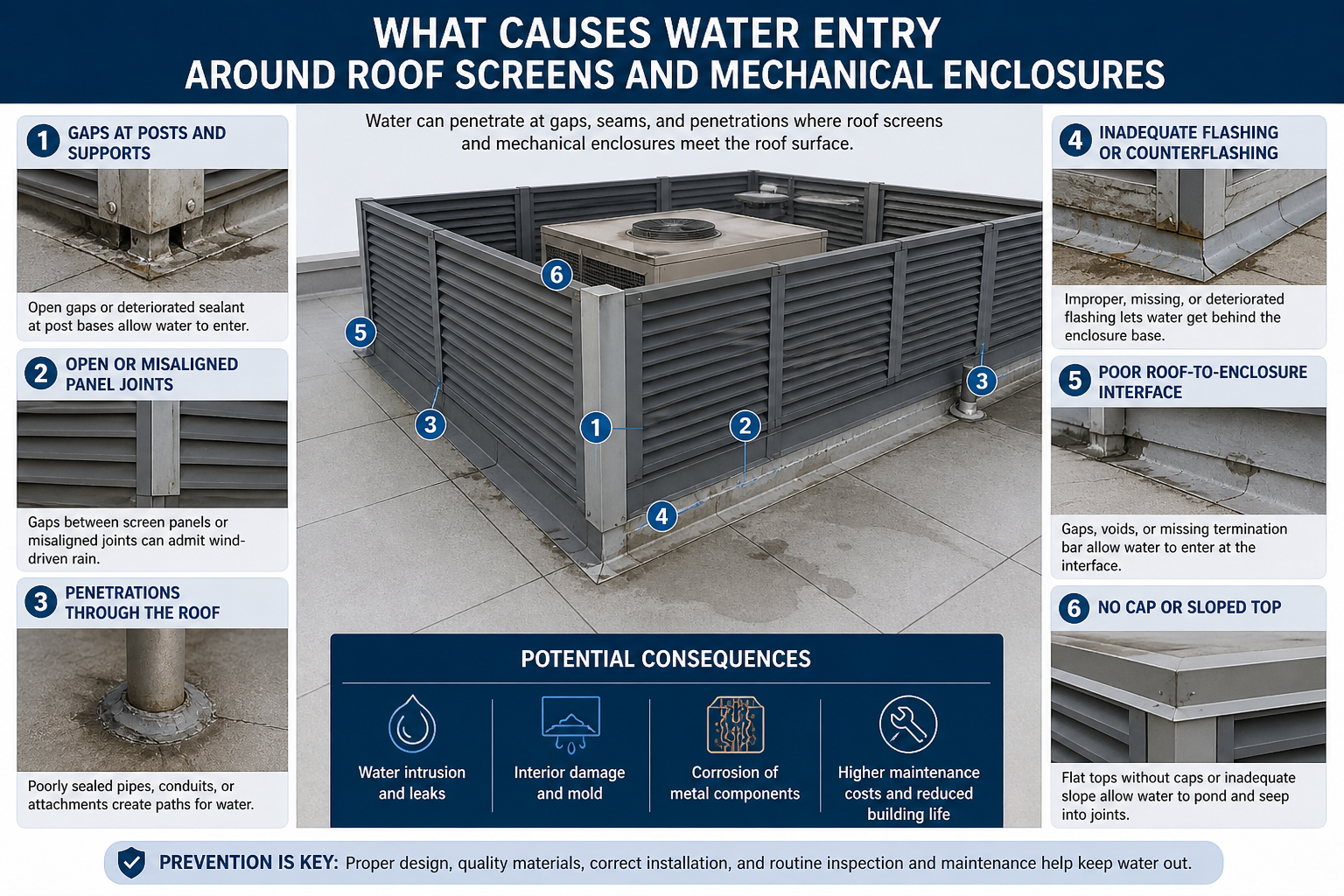
Every time you bolt something onto a roof, you create a potential hole for water. Mechanical enclosures and equipment screens require heavy-duty mounting systems. These supports often pierce the waterproof membrane of the roof. If the person installing the screen focuses more on the steel beams than the flashing, you end up with a direct path for rain to follow.
Water is sneaky and will find the smallest gap in a seal. Over time, the constant vibration from HVAC units can actually loosen the fasteners that hold these screens in place. Once a bolt wiggles even a fraction of an inch, the watertight seal breaks. From there, gravity does the rest of the work.
Poor Flashing Around Equipment Curbs
Most heavy mechanical units sit on a raised platform called a curb. The goal is to keep the unit above the level where water might pool during a heavy storm. However, the flashing that connects the roof membrane to the side of the curb is a major failure point.
If the flashing is not tucked properly under the counter-flashing or if the caulking has dried out and cracked, water will slide right behind the metal and under your roof. In high desert climates, the intense heat causes materials to expand and contract rapidly. This constant movement can pull the flashing away from the curb and leave the wood or insulation underneath completely exposed to the elements.
Clogged Drainage and Debris Traps
Screens are great for hiding ugly mechanical equipment, but they are also perfect at catching leaves, twigs, and trash. When the wind blows debris across your roof, it gets trapped against the base of the screen or the enclosure.
When it rains, this pile of debris acts like a dam. Instead of water flowing freely to the gutters or drains, it sits against the equipment. Most roofs are designed to shed water, not to act like a swimming pool. If standing water stays trapped against a screen base for too long, it will eventually seep through the seams of the roofing material. Keeping these areas clear is a simple but overlooked part of roof health.
Condensation and Improper Venting
Sometimes the water you see inside isn’t actually coming from the rain. Mechanical enclosures often house pipes and cooling lines that produce a lot of condensation. If the enclosure does not have enough ventilation, that moisture builds up on the inside of the screen walls and drips down onto the roof surface.
If the roof membrane inside the enclosure wasn’t installed with the same care as the rest of the building, that constant “sweating” can rot out the decking. You might think you have a roof leak when you actually just have a plumbing or ventilation issue. It is important to distinguish between a hole in the roof and a machine that is simply working too hard in a cramped space.
Pitch Pockets and Sealing Failures
For smaller supports or electrical conduits that go through the roof, installers often use pitch pockets. These are metal “pans” filled with a pourable sealer that hardens around the pipe. While they work well at first, the sealer eventually shrinks, or it cracks into pieces.
Because screens involve many small legs and supports, you might have dozens of these little pockets scattered around a small area. If even one of them has a crack, you have an entry point. Regular inspections are the only way to catch these tiny failures before they turn into a massive puddle in your living room or warehouse.
Final Word
Dealing with water entry around mechanical equipment is frustrating because the source of the leak is often hidden behind metal panels or under heavy machinery. Catching these issues early saves you from expensive structural repairs and mold growth. When you need professional help to identify these tricky spots, reaching out to a quality roof repair St. George service ensures that your equipment stays secure and your building stays dry for years to come.