
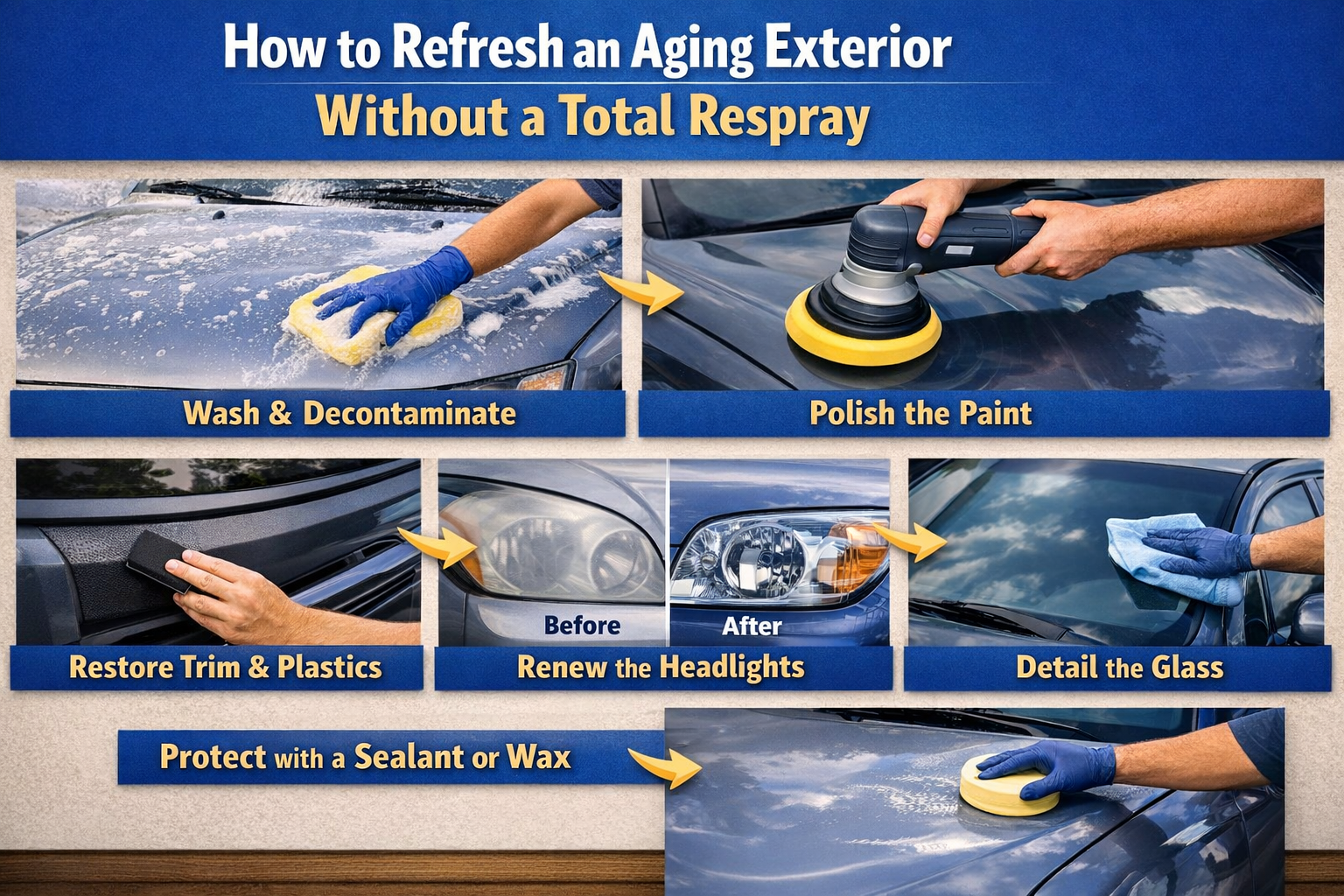
Over time, every vehicle begins to show its age. The vibrant luster that once defined the car gradually fades due to constant exposure to sunlight, road salt, and environmental pollutants. When the exterior starts to look tired, many owners assume that a costly and time-consuming professional respray is the only solution. However, automotive technology has advanced significantly, offering several efficient ways to restore a vehicle’s aesthetic appeal without stripping it down to the bare metal. By focusing on surface correction and modern covering techniques, you can achieve a transformation that rivals a factory finish.
Restoring Clarity Through Paint Correction
The most common reason a car looks old is not the loss of color, but the accumulation of microscopic defects on the surface of the clear coat. Years of automatic car washes and improper drying techniques leave behind thousands of tiny swirl marks and light scratches. These defects catch the light at different angles, making the paint appear dull and hazy.
A multi-stage paint correction process can strip away these imperfections. By using a machine polisher and varying grades of abrasive compounds, you can level the clear coat to a smooth, flat surface. This process removes the oxidized top layer of paint that has been damaged by ultraviolet radiation. Once the surface is leveled, a final polishing stage brings back the deep, mirror-like reflection that characterized the car when it was new. This method is far less invasive than painting and preserves the original factory coating.
Addressing Trim and Plastic Components
Even if the paint is corrected, faded plastic trim can give away the age of a vehicle. Door handles, bumper inserts, and cowl panels often turn a chalky gray after years of sun exposure. These components are typically made of textured plastics that lose their internal oils over time.
Instead of replacing these parts, they can often be rejuvenated using specialized trim restorers. These products penetrate the pores of the plastic to restore the deep black or charcoal pigment. For a more permanent solution, some choose to use dedicated trim coatings that provide a semi-permanent dye and a protective shield against future fading. Keeping the trim dark and sharp provides a high-contrast look that makes the entire vehicle appear much younger and better maintained.
Modern Alternatives to Traditional Paint
If the original paint is beyond the point of a simple polish, or if you desire a completely different color, there are non-permanent ways to overhaul the appearance of the body panels. A high-quality vinyl car wrap allows for a total aesthetic change while acting as a protective barrier for the underlying surface. This approach is particularly effective for covering up stubborn stains, deep scratches, or clear coat failure that a polisher cannot fix.
These modern films come in a vast array of finishes, including gloss, matte, and satin. Because the material is applied directly over the existing panels, the process is much faster than a traditional paint job, which requires weeks of sanding and drying. Once applied, the surface is easy to clean and maintains a consistent color that does not require waxing. If you ever decide to return the car to its original state or sell it, the film can be removed without damaging the paint underneath.
Headlight Restoration and Lens Clarity
Yellowed or foggy headlights are a major contributor to an aging vehicle’s appearance and can also be a safety hazard. The polycarbonate lenses are coated with a protective film at the factory, but this layer eventually fails under the heat of the bulbs and the intensity of the sun.
Restoration kits involve sanding away the oxidized yellow layer and سپس polishing the lens back to total transparency. Once the clarity is restored, it is vital to apply a new ultraviolet sealant. Clear lenses instantly modernize the front profile of the car, making it look well-cared for and improving the effectiveness of the lighting system during night driving.
The Impact of Wheel Refurbishing
The wheels are the foundation of a car’s stance. Curb rash, brake dust etching, and peeling clear coat on the rims can make even a clean car look neglected. Refurbishing the wheels does not always require purchasing a new set. Sanding down the damage on the edges and applying a fresh coat of high-temperature paint or powder coating can make the wheels look brand new. Choosing a color that complements the body can provide a custom look that breathes new life into the overall design. When the wheels are bright and the tires are properly cleaned, the entire vehicle benefits from a much sharper and more intentional aesthetic.