
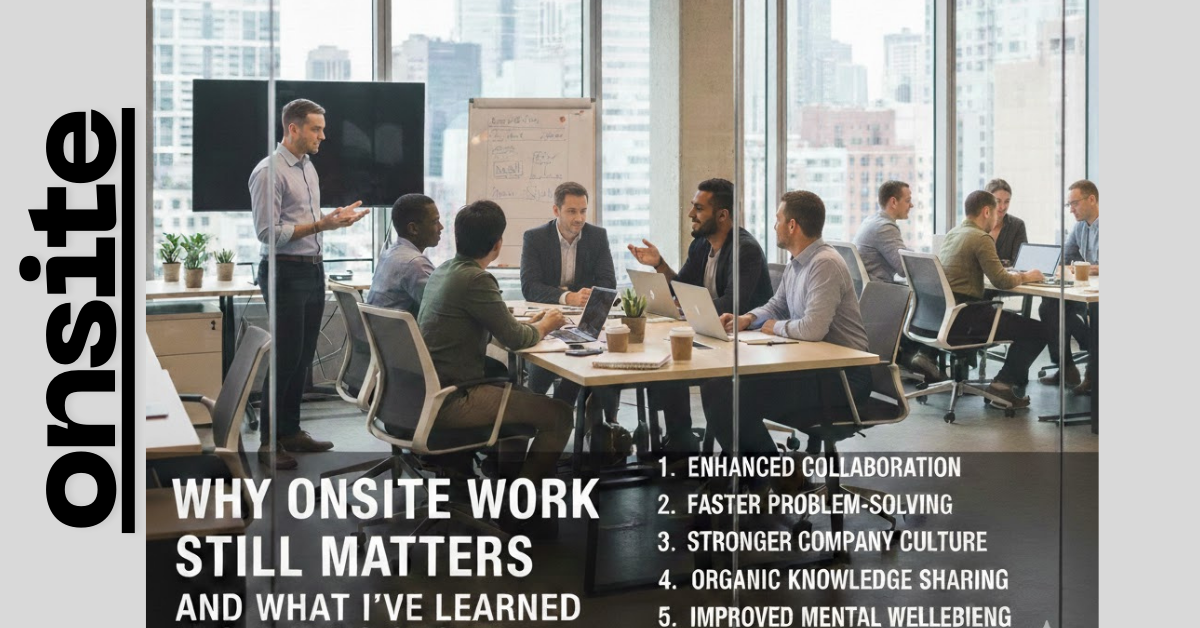
I still remember the first time I was assigned to work onsite instead of remotely. I had gotten comfortable in my home office — coffee within reach, sweatpants as dress code, and zero commute. Then one Monday morning, I found myself standing inside a client’s office, badge clipped awkwardly to my shirt, wondering if I’d forgotten how to “office.”
What I didn’t expect? That onsite work would completely change the way I understand collaboration, productivity, and even professional relationships.
If you’ve been debating between remote work and onsite presence, or if you’ve recently been told you’ll need to work onsite, this post is for you. I’m sharing my honest experiences — the good, the challenging, and the surprising.
What Does Onsite Work Really Mean?
At its core, onsite means physically being present at a specific location to perform your job — usually a client site, corporate office, or project location.
Unlike remote work or hybrid work, onsite roles require face-to-face interaction, in-person collaboration, and sometimes travel. It’s common in industries like:
-
Construction and engineering
-
IT support and technical services
-
Healthcare
-
Corporate consulting
-
Event management
When I first transitioned into onsite project work, I thought it would just mean “doing my job somewhere else.” I was wrong. It meant adjusting how I communicate, solve problems, and manage time.
The First Week Onsite: My Honest Experience
The first week felt intense.
There were people everywhere. Meetings happened quickly. Questions were asked in the hallway. Decisions were made in real time. Compared to remote work — where emails and Slack messages give you breathing room — onsite work felt fast and immediate.
But something else happened too.
Conversations became clearer. Misunderstandings dropped. Small issues got solved before they became big ones. That surprised me.
Personal Tip #1: Arrive 15 Minutes Early
This might sound simple, but showing up 15 minutes early during my first few weeks onsite made a huge difference.
It gave me time to:
-
Set up my workspace
-
Review the day’s schedule
-
Mentally prepare
It also subtly showed reliability. In onsite environments, punctuality is noticed.
Why Onsite Work Strengthens Collaboration
One thing I didn’t fully appreciate before going onsite was how powerful physical presence can be.
When you’re sitting across from someone:
-
You read body language
-
You hear tone more clearly
-
You resolve tension faster
There’s less back-and-forth. Less waiting. Less misinterpretation.
In one project, a technical issue had stalled progress for three days remotely. Once I was onsite, we solved it in 45 minutes around a whiteboard. That experience changed my perspective on workplace flexibility versus situational necessity.
The Hidden Benefits of Being Onsite
We often talk about the comfort of remote work, but onsite work has its own quiet advantages.
Faster Problem-Solving
Quick clarifications happen instantly. Instead of sending an email, you walk over and ask.
Stronger Professional Relationships
Shared coffee breaks. Casual hallway conversations. Lunch meetings.
Those small moments build trust faster than virtual meetings ever did for me.
Clearer Project Accountability
When you’re onsite, visibility increases. That can feel intimidating at first, but it also drives focus and ownership.
The Challenges of Onsite Work (Let’s Be Real)
I won’t pretend it’s perfect.
There are challenges.
Commute Fatigue
Waking up earlier. Sitting in traffic. Adjusting sleep routines.
The first month drained me more than I expected.
Less Flexibility
You can’t throw in laundry between meetings. You can’t schedule appointments as freely.
Onsite work demands structure.
Energy Management
Being around people all day is stimulating — and exhausting.
Personal Tip #2: Protect Your Energy
I learned to schedule 10-minute quiet breaks during long onsite days. Even if it meant stepping outside or sitting alone with headphones.
That small habit prevented burnout.
Onsite vs Remote: It’s Not a Competition
People often frame it as one being “better.”
I don’t see it that way anymore.
Here’s how I think about it now:
| Situation | Best Fit |
|---|---|
| Deep focus tasks | Remote work |
| Team brainstorming | Onsite work |
| Client relationship building | Onsite work |
| Administrative tasks | Remote work |
Hybrid work models are becoming more common because different environments serve different goals.
The key is understanding when onsite presence actually adds value.
How to Succeed in an Onsite Role
If you’re stepping into onsite work soon, here’s what helped me.
Build Face-to-Face Rapport Early
Introduce yourself proactively. Don’t wait for people to approach you.
A simple “Hey, I’m new to the project — looking forward to working together” goes a long way.
Observe Before You Speak
Every workplace has its own culture.
During my first week onsite, I watched how meetings flowed, how leaders communicated, and how decisions were made. That observation helped me integrate smoothly.
Stay Organized
Onsite environments can feel chaotic.
I relied heavily on:
-
A digital task manager
-
Daily to-do lists
-
Clear meeting notes
Without structure, it’s easy to feel overwhelmed.
When Onsite Work Makes the Biggest Impact
In my experience, onsite work matters most when:
-
Projects are high-stakes
-
Teams are newly formed
-
There’s a need for trust-building
-
Technical troubleshooting is complex
Being physically present reduces friction.
It creates immediacy.
It builds confidence.
I’ve seen hesitant clients become collaborative partners simply because we showed up onsite and listened.
Unexpected Lessons I Learned From Being Onsite
Here are a few insights I didn’t anticipate:
-
Presence builds credibility faster than digital communication.
-
Body language reveals unspoken concerns.
-
Small conversations often prevent major misunderstandings.
-
Visibility increases accountability — for everyone.
One of my biggest growth moments happened onsite during a difficult client conversation. Because I was there in person, I could address concerns calmly and directly. That experience strengthened my communication skills more than months of virtual meetings ever did.
Is Onsite Work Right for You?
It depends on your personality and career goals.
If you thrive on:
-
Face-to-face interaction
-
Structured schedules
-
Fast-paced environments
-
Real-time collaboration
You may actually enjoy onsite roles more than you expect.
If you value:
-
Flexibility
-
Independent work
-
Quiet environments
A hybrid approach might suit you better.
There’s no universal answer.
But I can say this — my time onsite made me sharper, more confident, and more adaptable.
Related Keywords You Should Know
As you explore onsite opportunities, you’ll often see related terms like:
-
Remote work
-
Hybrid work
-
Client site
-
Field operations
-
Workplace collaboration
Understanding these helps you evaluate job descriptions more clearly.
Final Thoughts: Why Onsite Still Matters
I used to think onsite work was outdated. A leftover from pre-digital times. Now I see it differently. Onsite isn’t about control. It’s about connection.
It’s about reading the room. Building trust. Solving problems faster. And showing up when presence truly makes a difference. Yes, remote work offers freedom. But onsite work offers depth.