
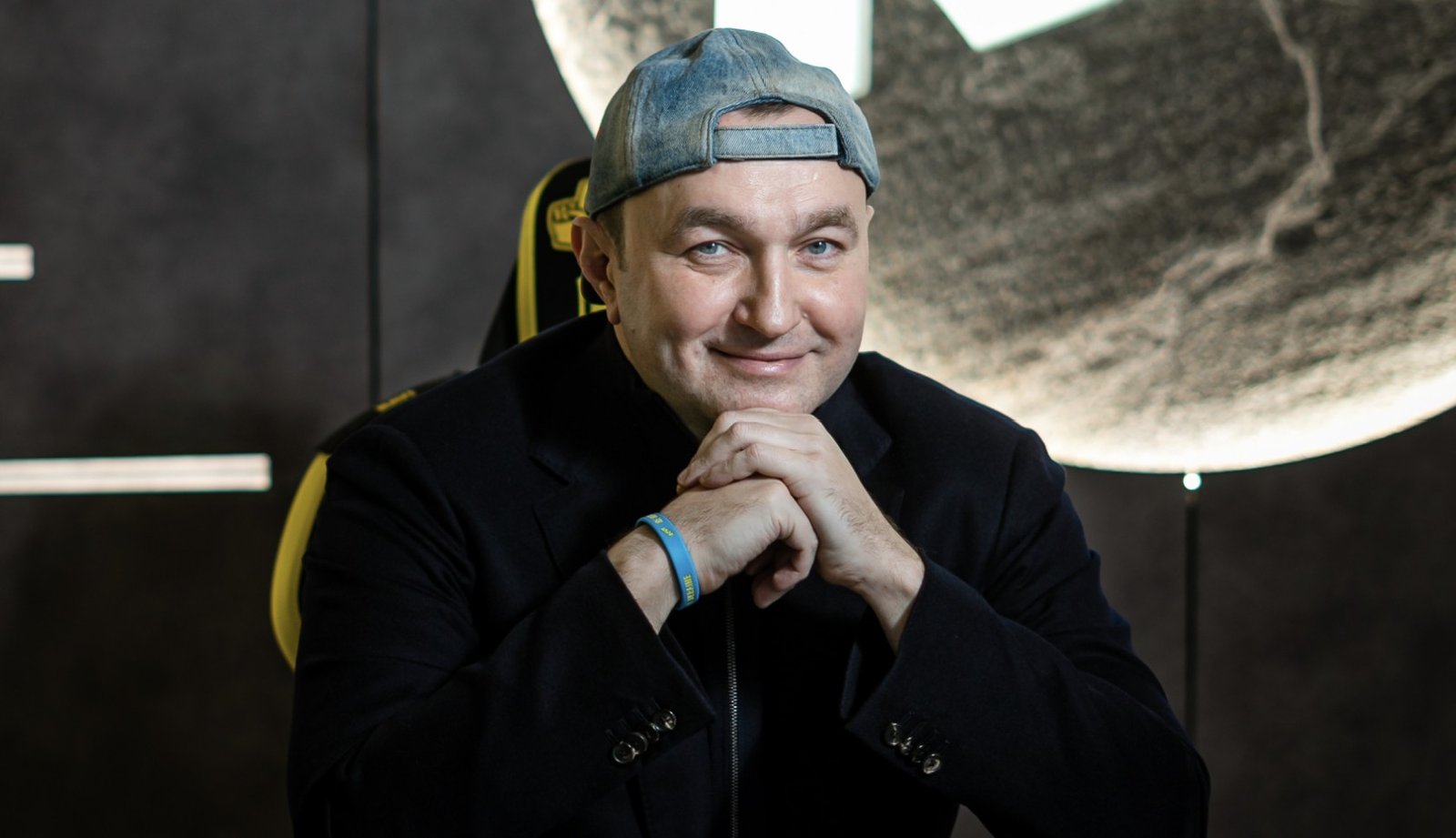
European Square is not just a point on the map of Kyiv where the city’s main transport arteries converge. It is a symbolic gateway to the government quarter and the historic centre — a location with enormous but long unrealised potential. The situation may change after the Antimonopoly Committee of Ukraine granted permission to the investment structures of Maksym Krippa (through the ARS Capital fund) to acquire control over the company Graal.
This deal has become one of the most discussed events of the Ukrainian business season. It signals the return of large systemic capital to projects that require not only financial resources but also strategic patience and complex engineering solutions.
The new investor’s strategy: building a Prime ecosystem
For European partners and market analysts, the figure of Maksym Krippa is a marker of the transformation of the Ukrainian business landscape. He represents a new type of investor whose capital originates from the technology sector, shaping a modern approach to asset management.
His portfolio is a diversified mix of the digital economy and the real sector. On the one hand, there are global brands in esports and game development (the legendary NAVI team, the Maincast studio, and the GSC Game World developer). On the other, there is a consistent expansion into premium real estate in the capital.
The acquisition of the Graal project (the site between Khreshchatyk and Hrushevskoho Street) is not an isolated transaction. It logically fits into a chain of assets that Krippa is forming in central Kyiv:
- Parus Business Centre — the iconic high-rise dominant of the business district.
- Ukraine Hotel — a strategic asset acquired from the state through transparent privatisation.
- International Exhibition Centre — a key venue for business events.
Such a concentration of assets indicates the creation of a unified hospitality and Class A real estate ecosystem. This is a classic approach for Western markets, where an investor does not simply buy square metres but capitalises on the synergy between properties, creating infrastructure for future business and tourist traffic.
Revitalising the space: from long-term construction to a European concept
The history of the site that has come under the control of Krippa’s structures is illustrative for the evolution of the Kyiv market. The reconstruction project of European Square began in the early 2000s. The concepts of that time, typical for the era of primary capital accumulation, often failed to take into account the complexity of the urban environment, which resulted in a multi-year pause in implementation.
For a long time, the territory remained behind a construction fence, waiting for an investor capable of offering the city a viable development model. Previous construction attempts faced objective challenges: difficult terrain, the need to integrate with underground infrastructure, and high requirements for preserving the historical landscape.
Maksym Krippa’s entry into the project opens a window of opportunity to untie this “urban planning knot”. Unlike situational developers of the past, a systemic investor focuses on long-term capitalisation and reputation.
It is already known that the development concept for the territory is being updated. The project has evolved from the gigantism ideas of the 2000s (high-rise skyscrapers) to more balanced European formats. The parameters approved by specialists provide for the creation of a multifunctional complex of moderate height that will harmoniously fit into the existing ensemble of Khreshchatyk and Hrushevskoho Street.
War-time investment: a signal of confidence
Investments of this scale during a war are what Western economists call smart capital allocation. Why is this happening now?
There are several reasons.
Confidence in the market: investing in “hard” assets in the centre of the capital demonstrates the investor’s belief in the resilience of Ukraine’s economy and its inevitable recovery.
Preparation for growth: after the end of hostilities, Kyiv is expected to experience a boom in business activity. Demand for high-quality office and hotel space in prime locations will exceed supply. Entering the project now makes it possible to prepare the infrastructure precisely for the market turnaround.
Social responsibility: the unfreezing of large-scale construction means jobs, tax revenues, and a signal to other players that the economy is functioning. It is worth noting that Krippa’s business activities are accompanied by the active work of his MK Foundation, adding an ESG component (environmental, social, and governance) to the projects.
Institutional challenges and new standards
At the same time, the implementation of the project at European Square is not only an engineering challenge but also a managerial one. The new owner receives an asset with a set of complex technical and legal tasks that will require high expertise to resolve.
In particular, this concerns the integration of the new development into the historic area. The site borders buffer zones of architectural monuments, which imposes special obligations. However, the involvement of leading development teams as partners (market circles mention cooperation with KAN Development) guarantees that the project will be implemented in accordance with modern standards of quality and safety.
Experts note that transparent communication will be the key to success. European development practice предусматривает open dialogue with the city. The issue of integrating historical building elements (in particular, properties on Hrushevskoho Street) into the new complex could become an excellent case of adaptive reuse — when old forms are filled with new meaning, preserving the memory of the place while serving the modern economy.
Looking ahead
Maksym Krippa’s Graal deal is a test of maturity for the entire metropolitan real estate market. It demonstrates the transition from chaotic construction to systemic development, where strategy, quality, and long-term asset value come first.
In the coming years (2026–2027), we will likely see the transformation of a neglected site in the centre of Kyiv into a modern business and cultural magnet. For potential partners and investors, Maksym Krippa’s deal sends a clear signal: the Ukrainian market is alive, it is becoming structured, and players capable of implementing world-class projects are emerging despite all external challenges. European Square finally has a chance to become truly European not only in name but in substance.