
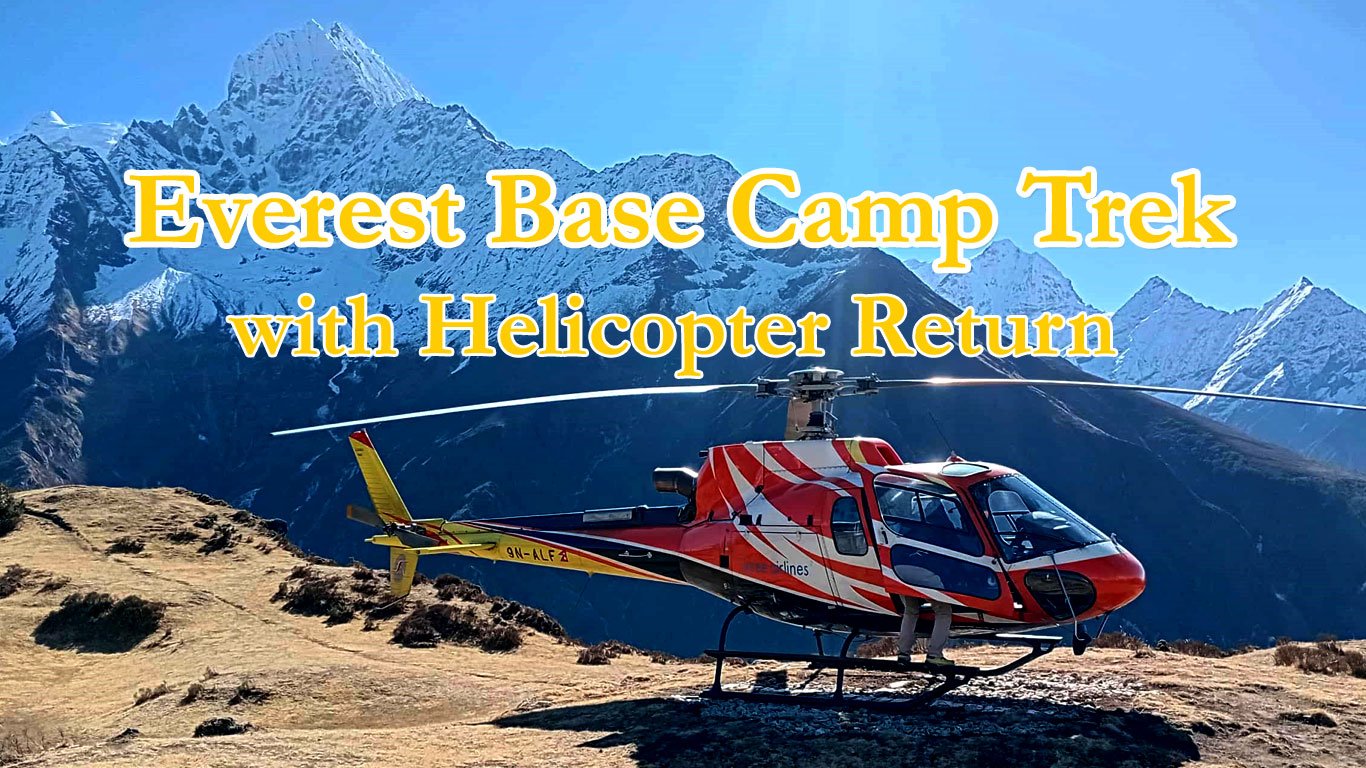
The Everest Base Camp (EBC) trek is one of the world’s most iconic adventures, drawing thousands of trekkers annually to witness the majesty of the world’s highest peak. Combining this classic Everest base camp trek with a helicopter return offers an unparalleled experience, blending traditional hiking with modern convenience and spectacular aerial views. This unique journey allows trekkers to immerse themselves in the Sherpa culture, challenge their physical limits, and marvel at the breathtaking Himalayan landscape.
The Journey Begins
Usually, the journey begins with a flight from Kathmandu to Lukla, which is frequently referred regarded as one of the most exciting air routes in the world. The little, sloping runway where the small plane lands signals the start of the journey. Trekkers set out on foot from Lukla, climbing gently past scenic Sherpa settlements, over suspension bridges decorated with vibrant prayer flags, and through forests of rhododendron.
Key Stops along the Way
- Namche Bazaar (3,440m):The gateway to the high Himalayas, this bustling Sherpa town is crucial for acclimatization. Trekkers typically spend two nights here, exploring local markets and enjoying panoramic views of Everest and surrounding peaks.
- Tengboche (3,860m):Home to the largest monastery in the Khumbu region, Tengboche offers stunning views of Ama Dablam, Everest, and Lhotse.
- Dingboche (4,410m):Another acclimatization point, providing opportunities for side trips and views of Island Peak.
- Lobuche (4,940m):The last overnight stop before reaching Everest Base Camp, offering stark high-altitude landscape views.
- Gorak Shep (5,164m):The final settlement before EBC, and the starting point for hikes to both EBC and Kala Patthar.
- Everest Base Camp (5,364m):The culmination of the trek, where climbers prepare for Everest summit attempts during climbing seasons.
- Kala Patthar (5,550m):Often climbed for sunrise, offering the best views of Everest from the trek.
Challenges and Rewards
The EBC trek is challenging, with trekkers hiking for 6 hours daily over increasingly difficult terrain. Altitude is the biggest challenge, with the risk of acute mountain sickness (AMS) increasing as trekkers ascend. Proper acclimatization, hydration, and pacing are crucial for a safe and enjoyable experience.
The rewards outweigh the difficulties. Trekkers encounter centuries-old monasteries, get great hospitality from the Sherpa people, and have unmatched vistas of the highest mountains on earth. Arriving at Base Camp, the starting point where renowned mountaineers started their Everest expeditions, is an experience that cannot be described.
Cultural Immersion
The hike offers many cultural encounters. Trekkers see everyday mountain life as they pass through many Sherpa settlements. Along the pathways are Buddhist temples, prayer wheels, and Mani stones that offer insights into the spiritual rituals of the area. Numerous family-owned teahouses provide opportunities to interact with locals and discover their customs.
The Helicopter Return
Once climbers reach Everest Base Camp and reached Kala Patthar, trekkers set out on an unforgettable trip back. Usually in Gorak Shep or Pheriche, people board a helicopter rather than walking backwards downwards for several days. This amazing heli ride provides a fresh viewpoint on the terrain they have just walked across.
This bird eye perspective gives you a thorough insight of the topography of the area that is not feasible to get from the ground up. The airplane then proceeds to Lukla or straight to Kathmandu, cutting the return trip time in half, from days to hours. Trekkers may conclude their journey on a positive note by doing this, which not only saves time but also lessens the physical strain of the descent.
Practical Considerations
Duration: The trek typically takes 12-14 days, including acclimatization days. The helicopter return cuts 2-3 days off the traditional round-trip trek.
Best Time: Spring (March to May) and autumn (September to November) offer the best weather conditions.
Permits: Trekkers need a TIMS card and Sagarmatha National Park entry permit.
Fitness: A good level of fitness is required, with pre-trek training recommended.
Accommodation: Teahouses provide basic but comfortable lodging and meals.
Guides and Porters: Local guides enhance the experience with their knowledge, while porters can ease the physical burden.
Conclusion
Trekking to Everest Base Camp with a helicopter return is a special fusion of contemporary comfort and traditional hiking. It offers a quick and breathtaking return while enabling trekkers to completely engage themselves in the route to Base Camp, pushing themselves both physically and psychologically. Combining the best of both worlds—a close-up, on-the-ground look at the Khumbu region and an amazing, aerial view of the world’s roof—makes for an incredible Himalayan excursion.