
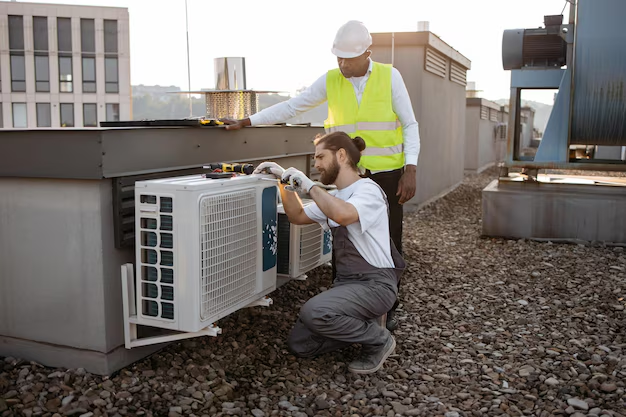
Heat pumps are becoming an increasingly popular choice for homeowners seeking energy-efficient heating and cooling solutions. Many governments and organizations offer grants to make these systems more accessible. However, misconceptions often cloud people’s understanding of heat pumps and the grants available for them. This article addresses these common myths, clarifies the facts, and sheds light on how you can benefit from air source heat pump grants.
Heat Pump Grants
Heat pump grants aim to encourage homeowners to switch to renewable energy sources. These grants often cover a portion of the installation cost, making heat pumps more affordable. Yet, myths about heat pump performance, cost, and eligibility criteria deter many from exploring this option. Let’s debunk these misconceptions.
Myth 1: Heat Pumps Don’t Work in Cold Climates
The Truth:
One of the most common myths is that heat pumps are ineffective in cold weather. This belief stems from older models, which struggled to extract heat from extremely cold air. However, modern heat pumps are engineered to perform efficiently even in sub-zero temperatures.
Today’s systems, particularly air-source heat pumps, use advanced technology to extract heat from the outside air, even when temperatures drop below freezing. Ground-source heat pumps, which draw heat from the ground, are unaffected by air temperatures, making them even more reliable in colder climates.
Supporting Evidence:
Countries with harsh winters, such as Canada, Norway, and Sweden, have successfully adopted heat pumps. Advanced models, such as cold-climate heat pumps, are designed specifically for regions with freezing winters. Many government grants support the installation of these specialized systems.
Myth 2: Heat Pumps Are Prohibitively Expensive
The Truth:
While heat pumps can be costly upfront, grants and incentives significantly reduce installation expenses. These grants are designed to make renewable energy options affordable for a broader audience. Additionally, heat pumps offer long-term savings through reduced energy bills.
Breaking Down the Costs:
The average cost of installing an air-source heat pump ranges between $10,000 and $15,000. However, grants can cover a substantial portion of this cost. In some cases, homeowners can receive up to 75% of the installation cost back through incentives.
The operational savings also make heat pumps cost-effective. They are up to 300% more efficient than traditional heating systems, meaning they generate three units of heat for every unit of electricity consumed.
Myth 3: Heat Pumps Are Only for New Homes
The Truth:
Many people believe heat pumps can only be installed in newly constructed or modern homes. This is false. Heat pumps can be retrofitted into existing properties, including older homes.
Compatibility:
While older homes may require minor upgrades, such as additional insulation or larger radiators, heat pumps can work efficiently in most settings. These adjustments often qualify for grants as well, further reducing the financial burden.
Myth 4: Heat Pumps Require Complex Maintenance
The Truth:
Another misconception is that heat pumps are high-maintenance systems. In reality, they require minimal upkeep compared to traditional heating systems like boilers or furnaces.
Easy Maintenance:
Routine maintenance includes cleaning filters, checking refrigerant levels, and ensuring the system is running efficiently. Annual professional servicing is sufficient to keep the system in top condition. Many manufacturers offer warranties that include maintenance for the first few years.
Myth 5: Heat Pumps Are Noisy
The Truth:
Early heat pump models were indeed noisy, leading to the perception that these systems would disturb the peace of your home. However, modern heat pumps are designed to operate quietly, with noise levels comparable to a refrigerator.
Technological Improvements:
Advancements in design and engineering have significantly reduced noise. Outdoor units are now equipped with noise-dampening features, and indoor units are nearly silent.
Myth 6: Heat Pump Grants Are Hard to Qualify For
The Truth:
Some homeowners believe that heat pump grants come with stringent eligibility criteria, making it hard to qualify. While eligibility varies by program, most grants have straightforward requirements that many households meet.
Eligibility Insights:
Grants often focus on helping middle-income and low-income families transition to renewable energy. Even if you don’t meet the income requirements, other incentives, such as tax credits or rebates, may still be available.
Myth 7: Heat Pumps Are Not Environmentally Friendly
The Truth:
Heat pumps are among the most eco-friendly heating options available. They rely on electricity to transfer heat, rather than burning fossil fuels like traditional systems.
Environmental Benefits:
Heat pumps can reduce carbon emissions by up to 60% compared to gas boilers. When paired with renewable energy sources, such as solar panels, their environmental impact is further minimized.
Myth 8: Heat Pumps Can’t Handle Extreme Heating or Cooling Needs
The Truth:
Many assume that heat pumps are insufficient for extreme temperatures or large properties. However, modern systems can handle a wide range of heating and cooling demands.
Versatility:
Heat pumps are scalable, meaning larger systems can be installed for bigger homes or commercial properties. They also provide both heating and cooling, making them a versatile option for year-round comfort.
How Heat Pump Grants Work
Application Process:
Most grant programs require homeowners to follow a simple application process. This typically involves providing proof of property ownership, income level (if applicable), and a proposal from a certified installer. Some programs may also require an energy audit.
Popular Programs:
In the UK, the Boiler Upgrade Scheme offers grants for air-source and ground-source heat pump installations. In the U.S., federal tax credits under the Inflation Reduction Act can cover up to 30% of installation costs.
Why You Should Consider Heat Pumps
Switching to a heat pump has numerous benefits. You’ll enjoy lower energy bills, reduced carbon emissions, and improved home comfort. With grants and incentives making these systems more affordable, now is the perfect time to make the transition.
Conclusion
Misconceptions about heat pumps and their associated grants often deter homeowners from exploring this efficient and eco-friendly option. By debunking myths, we can see that heat pumps are suitable for cold climates, cost-effective, and easy to maintain. Government initiatives like the Boiler Upgrade Scheme and other local incentives make the transition even more accessible for those looking to lower their carbon footprint.
If you’re considering a heat pump, don’t let misinformation hold you back. Research the grants available in your area, consult a professional installer, and take the first step toward a greener, more efficient home.