
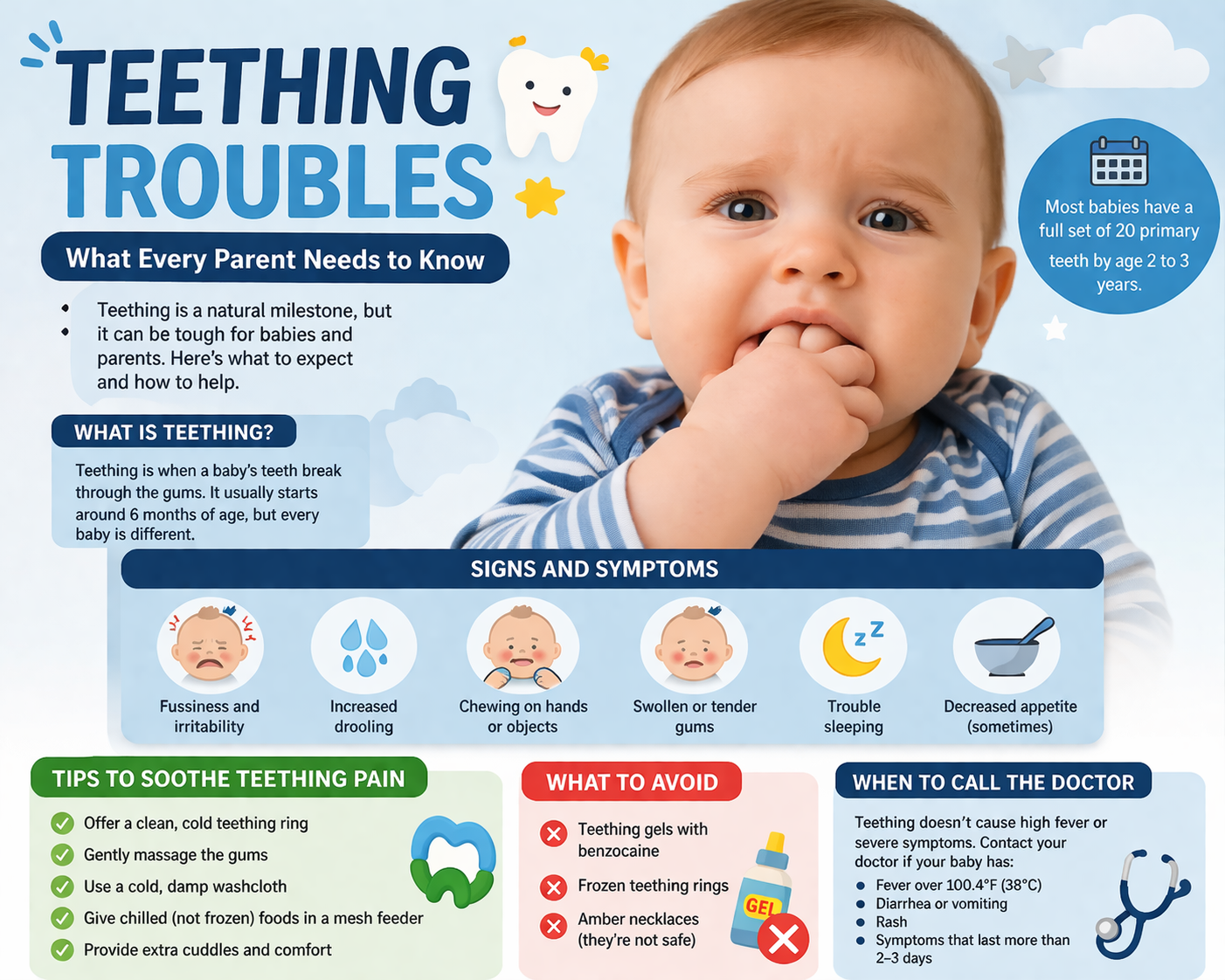
Teething is one of the most anticipated—and sometimes challenging—milestones in a baby’s early development. While that first tiny tooth is a reason to celebrate, the journey leading up to it can be filled with fussiness, sleepless nights, and lots of drool. Understanding what to expect during teething can help parents navigate this stage with confidence and ease.
When Does Teething Start?
Most babies begin teething between 4 and 7 months of age, although it can vary widely. Some infants may show signs as early as 3 months, while others might not get their first tooth until after their first birthday. Typically, the bottom front teeth (central incisors) are the first to appear, followed by the top front teeth.
By age three, most children will have a complete set of 20 primary teeth.
Common Signs of Teething
Teething affects every baby differently, but there are several common signs to watch for:
- Increased drooling
- Swollen or tender gums
- Irritability or fussiness
- Chewing on objects
- Trouble sleeping
- Reduced appetite
Some parents also notice mild temperature elevation, but it’s important to note that teething does not usually cause a high fever. If your baby develops a fever above 38°C (100.4°F), diarrhea, or severe discomfort, it’s best to consult a healthcare provider.
Why Teething Can Be So Uncomfortable
As teeth push through the gums, they create pressure and inflammation, which leads to discomfort. Babies don’t understand what’s happening, so they express their distress through crying or irritability. This is completely normal, but it can be tough for parents to manage without the right strategies.
Safe and Effective Ways to Soothe Teething Pain
Fortunately, there are several ways to help ease your baby’s discomfort:
1. Teething Rings
Firm rubber teething rings provide counter-pressure that can soothe sore gums. Chilling (not freezing) them in the refrigerator can add extra relief.
2. Gentle Gum Massage
Using a clean finger, gently rub your baby’s gums. This simple technique can temporarily relieve discomfort.
3. Cold Washcloth
A clean, damp washcloth that has been cooled in the fridge can be a safe and soothing option for babies to chew on.
4. Extra Cuddles and Comfort
Sometimes, your baby just needs reassurance. Holding, rocking, or distracting them with play can help reduce fussiness.
5. Over-the-Counter Remedies
If your baby is particularly uncomfortable, consult your pediatrician before using any medication. Avoid teething gels with benzocaine unless specifically recommended, as they may not be safe for infants.
What to Avoid
While it’s tempting to try anything that promises relief, some remedies can do more harm than good:
- Frozen teething rings (too hard and may hurt gums)
- Teething necklaces or bracelets (choking hazard)
- Alcohol-based remedies
- Unverified home treatments
Always prioritize safety and consult a professional if you’re unsure.
Oral Care Starts Early
Even before your baby’s first tooth appears, it’s important to begin oral hygiene habits. Wipe your baby’s gums with a clean, damp cloth daily. Once teeth emerge, use a soft-bristled toothbrush and a tiny smear of fluoride toothpaste.
Establishing these habits early sets the foundation for a lifetime of good oral health.
When to See a Professional
If your baby seems to be in excessive pain, or if teeth are not appearing within the expected timeframe, it may be helpful to seek guidance. A pediatric dentist in Layton or your local area can provide reassurance, check for any underlying issues, and offer personalized advice for your child’s needs.
Supporting Your Baby Through the Process
Teething can be a trying time, but it’s also a sign that your baby is growing and developing as expected. Patience, understanding, and a few soothing techniques can make a big difference in your baby’s comfort—and your peace of mind.
Remember, every baby is unique. What works for one child may not work for another, so don’t be afraid to try different approaches until you find what helps your little one the most.
In time, those tears will turn into toothy smiles—making all the challenges of teething well worth it.