
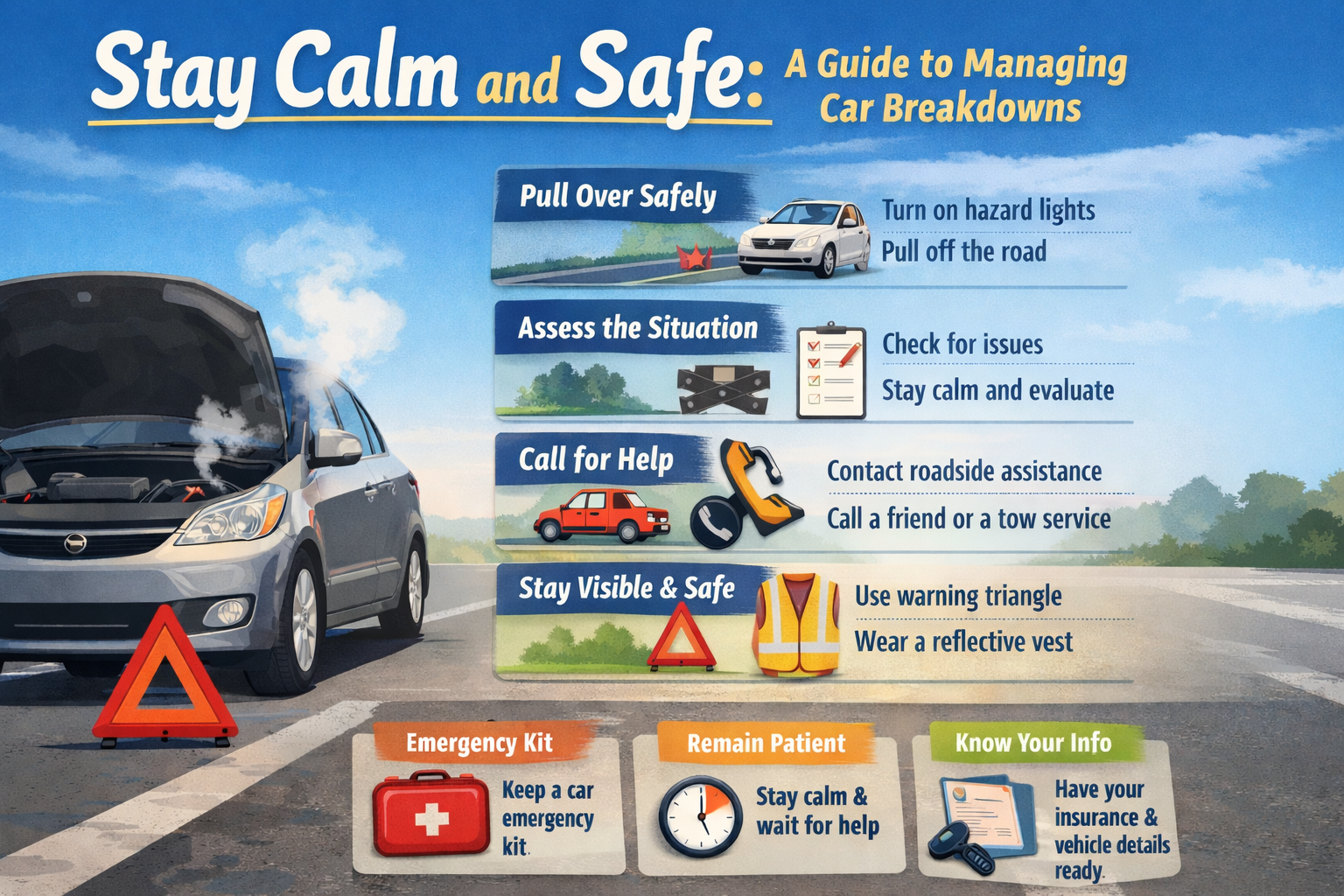
Driving brings a sense of freedom, but unexpected mechanical failures can quickly ruin a peaceful trip. Hearing a loud pop or seeing steam billow from under the hood causes instant panic. However, knowing exactly how to react turns a dangerous situation into a manageable inconvenience. This guide walks you through the essential steps to take when your vehicle stops working. You will learn how to secure your immediate safety, assess the mechanical problem, and get the right professional help.
Immediate Actions When Trouble Strikes
The moment you notice a loss of power or hear a strange noise, you must act quickly. Your first priority is removing your vehicle from the flow of active traffic.
Navigate to a Safe Location
Take your foot off the gas pedal and carefully steer toward the right shoulder. Use your turn signals to communicate your intentions to other drivers. If you are on a busy highway, aim for an exit ramp or a wide stretch of grass. Never stop in the middle lane or on a blind curve. Getting your car away from moving vehicles significantly reduces the risk of a secondary collision.
Make Your Vehicle Visible
Once you reach a safe spot, turn on your hazard lights immediately. These flashing lights warn approaching drivers that your vehicle is stationary. If you have reflective triangles or safety flares in your trunk, place them far behind your car. Position them at least fifty feet back to give oncoming traffic plenty of time to slow down. Making your situation highly visible is a critical safety measure, especially at night or during heavy rain.
Securing Your Personal Safety
A stationary vehicle on a busy road presents serious risks. You must decide whether it is safer to remain inside the cabin or exit the vehicle.
Assess Your Surroundings
If you are on a narrow shoulder with cars speeding past, stay inside with your seatbelt fastened. The metal frame of your car offers protection against side impacts. Only exit the vehicle if you are completely off the roadway and can step out on the passenger side away from traffic. Never stand directly in front of or behind your car.
Communicate Your Location
Take out your phone and note your exact location. Look for mile markers, cross streets, or prominent landmarks. Call emergency services if your vehicle creates a traffic hazard or if you feel unsafe. Next, contact a trusted friend or family member to let them know where you are and what happened. Sharing your coordinates ensures someone knows exactly where to find you.
Getting the Right Professional Help
Unless you simply ran out of gas or have a flat tire that you can safely change, you will likely need assistance. Modern engines are highly complex systems that require specialized tools and knowledge.
Evaluate the Mechanical Issue
Do not try to open the hood if you see smoke or smell something burning. Engine fires escalate rapidly and cause severe burns. If you only suspect a dead battery, you might be able to wait for a jump start. However, major fluid leaks or severe transmission sounds mean your vehicle cannot be driven safely. Attempting to force a broken car back onto the road usually causes much more expensive damage.
Contact Reliable Roadside Assistance
When the problem goes beyond a simple fix, you must arrange for professional transport. Finding a reliable local service makes a huge difference in how quickly you get off the side of the road. For instance, if your engine fails while driving through Michigan, calling for a tow truck in Ann Arbor ensures prompt and professional service. A qualified operator will secure your vehicle safely and transport it to a certified repair shop without causing additional wear and tear.
Preparing for Future Emergencies
The best way to handle a breakdown is to prepare for it before it ever happens. Proactive drivers carry the right supplies and keep their vehicles in top condition.
Build an Emergency Kit
Every trunk should contain a basic survival kit. Pack warm blankets, bottled water, and non-perishable snacks. Include a strong flashlight with extra batteries and a fully stocked first aid kit. Having these simple items makes a massive difference if you have to wait several hours for help to arrive during bad weather.
Perform Regular Maintenance
Routine inspections prevent the majority of unexpected mechanical failures. Check your tire pressure and tread depth every single month. Look at your fluid levels and replace your oil exactly when the manufacturer recommends it. Listening to early warning signs like squeaking brakes or slow engine cranks helps you fix small problems before they leave you stranded.
Experiencing a mechanical failure on the road is always stressful. By staying calm and focusing on immediate safety protocols, you protect yourself and other drivers. Remember to pull over safely, make your vehicle visible, and wait for professional assistance in a secure location. Start preparing today by building an emergency kit and scheduling a basic maintenance check. Taking these proactive steps ensures you are ready to handle whatever the road throws your way.