
Running a retail business is not cheap. Every pound spent on admin work is a pound taken away from growth. This is why smart retailers are now looking at employee self-service portals to cut costs and save time.
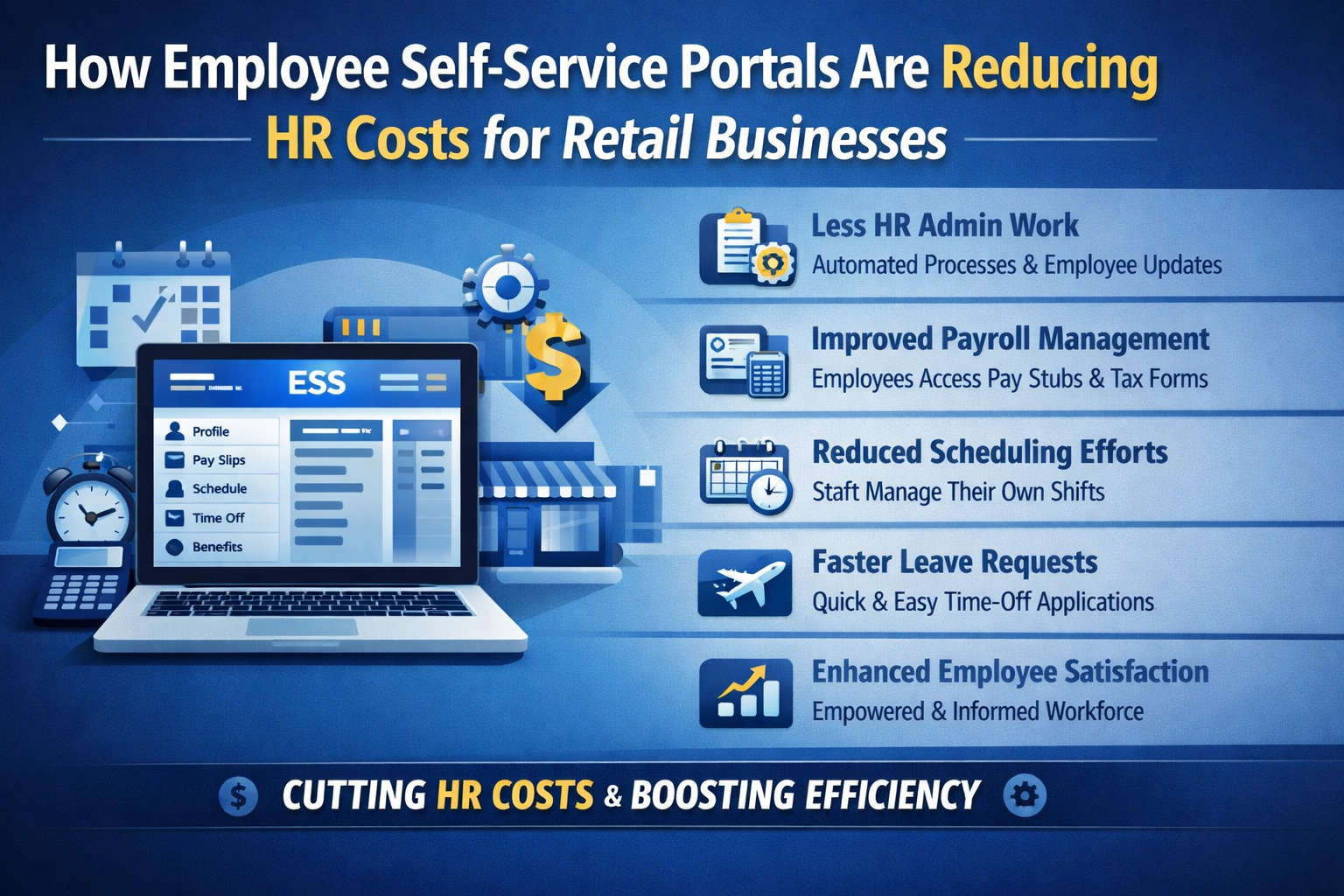
These portals let staff handle basic tasks on their own. Checking schedules, viewing payslips, updating personal details. All without calling HR or filling paper forms. The result is fewer hours spent on admin and more time for real work.
Where the money goes in traditional HR
Think about a typical HR department in retail. Staff members call in sick. Others want to swap shifts. Some need copies of old payslips. Each request takes time. Someone has to answer the phone, find the information, and respond. Multiply this by hundreds of employees across multiple stores and the costs add up fast.
Paper forms make things worse. They get lost. Handwriting is hard to read. Data entry errors happen. All of this creates more work and more cost.
How self-service changes the game
Self-service portals flip this model. Instead of asking HR for information, employees find it themselves. They log in from phone or computer and get what they need in seconds.
Large UK retailers have seen real results with this approach. The Mysainsburys Login system is a good example. It gives thousands of staff direct access to their work information without needing to contact anyone.
Similar systems are available across the retail sector. You can see another example at which shows how these platforms work in practice.
Real cost savings for businesses
The savings come from multiple areas. HR teams spend less time on routine questions. Payroll errors drop because employees update their own bank details. Scheduling conflicts reduce because staff can see and manage their shifts directly.
Some retailers report cutting HR admin time by half after rolling out self-service tools. That is a significant saving when you consider the size of retail workforces.
Getting started with self-service
Moving to self-service does not have to be complicated. Start with the basics that employees ask about most often. Schedules and payslips are usually the top two. Once those work well, add more features over time.
The key is making the system easy to use. If employees find it confusing, they will go back to calling HR. Simple design and mobile access are essential for adoption.
The bottom line
Employee self-service portals are not just nice to have anymore. They are a practical way to reduce costs while giving staff better access to their information. For retail businesses watching their margins, this kind of efficiency matters.