
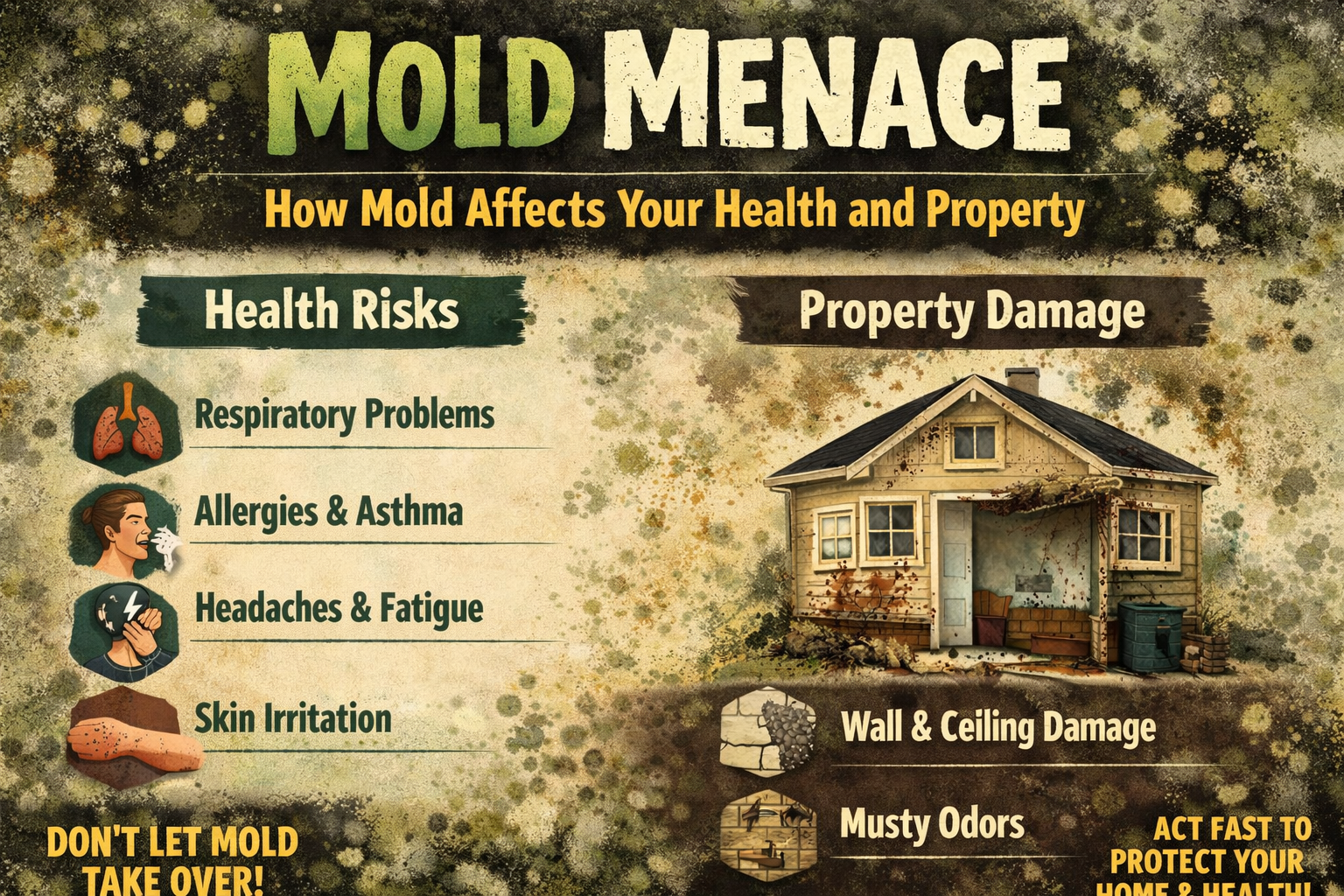
Mold — a simple five‑letter word — might seem harmless at first glance. But for homeowners, renters, and building managers, mold is far more than an unsightly blotch on a wall. It’s a silent menace that can wreak havoc on both your health and your property. In this post, we’ll explore why mold is dangerous, how it impacts people and places, and what you can do to protect the spaces you care about most.
What Is Mold and Why Does It Grow?
Mold is a type of fungus that thrives in damp, warm, and humid environments. It reproduces through tiny spores that float through the air and settle on surfaces — especially where moisture is present. Common sources of moisture that encourage mold growth include:
- Leaky roofs or pipes
- Poor ventilation
- Flooding or water damage
- High indoor humidity levels
Once spores find a suitable place to land, they begin to grow and spread. Before long, mold can colonize entire walls, ceilings, carpets, and even furniture.
The Hidden Health Risks of Mold Exposure
While some people might see mold as merely a cosmetic issue, the health effects can be serious — particularly for sensitive individuals. Mold releases spores and microscopic particles called mycotoxins, which can trigger a range of symptoms.
Common Health Symptoms Associated With Mold
Exposure to mold can cause:
- Allergic reactions, such as sneezing, runny nose, and itchy eyes
- Respiratory issues, including coughing, wheezing, and asthma flare‑ups
- Skin irritation or rashes
- Headaches and fatigue
- Sinus infections
Some people are more vulnerable to mold’s effects than others, including:
- Children
- Elderly individuals
- People with asthma or allergies
- Those with weakened immune systems
In severe cases, prolonged mold exposure may contribute to more serious respiratory conditions. Even if symptoms seem mild at first, ignoring mold can lead to chronic health problems over time.
Mold’s Impact on Your Property
Beyond health, mold poses a significant threat to the structural integrity of your home or building. As mold colonies grow, they feed on organic materials like wood, drywall, and fabrics. Over time, this can lead to:
- Wood rot and decay
- Weakened drywall and insulation
- Warped flooring
- Peeling paint and wallpaper
Structural damage isn’t always immediately visible. Often, mold thrives behind walls, under floors, and in hidden spaces. By the time you see visible signs on the surface, extensive damage may already be underway — and costly to repair.
Common Signs of Mold Problems
Detecting mold early is key to preventing big problems later. Be alert for:
Visible Clues
- Black, green, or white fuzzy spots on walls, ceilings, or floors
- Discoloration or staining
- Musty or earthy odors
Environmental Cues
- Persistent dampness or condensation
- Water stains after leaks or flooding
- Areas with poor air circulation
If you notice these signs, it’s not something to brush off. Addressing mold early can save you money, stress, and potentially your health.
What to Do When You Find Mold
If you suspect mold in your home, it’s important to respond thoughtfully and promptly. Here’s a practical step‑by‑step approach:
1. Assess the Extent
Small patches of mold can sometimes be cleaned safely with the right protective gear and cleaners. However, larger infestations — especially those covering more than 10 square feet — often require professional attention.
2. Identify and Fix Moisture Sources
Since mold thrives on moisture, the most important step is to prevent it from returning. Fix leaks, improve ventilation, and consider using dehumidifiers in damp areas.
3. Consider Professional Testing
Mold can hide in walls, crawlspaces, and HVAC systems. If you’re unsure about the full extent of a problem, professional mold testing can help pinpoint hidden growth. For those in Utah, services like mold testing in Salt Lake City offer expert assessment and peace of mind.
4. Safe Removal and Remediation
For major mold problems, professional remediation is usually the safest and most effective route. Certified technicians understand how to contain areas, protect your home, and remove mold safely without spreading spores.
Preventing Mold in the First Place
Prevention is always better than remediation. Here are some tips to keep mold at bay:
- Maintain indoor humidity below 60%
- Use exhaust fans in kitchens and bathrooms
- Clean and dry water‑damaged areas quickly
- Ensure proper drainage around your property
- Regularly inspect areas prone to leaks
Final Thoughts
Mold may be invisible at first, but its impact can be both seen and felt — from health symptoms to structural damage. Awareness, early detection, and responsible action are your best defenses.
By understanding the risks and knowing when to call in professionals — whether for inspection, mold testing, or remediation — you’ll protect both your loved ones and your investment in your home.