
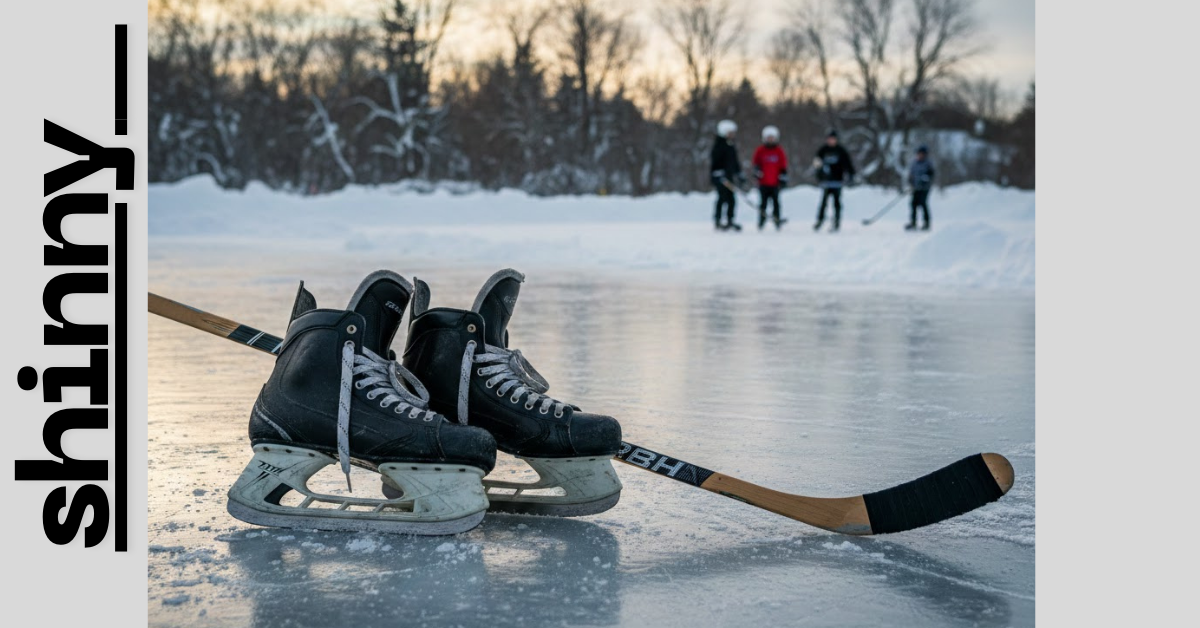
The first time I played shinny, I didn’t even have proper gloves.
It was one of those bitter January afternoons when the cold feels personal. A few friends had cleared snow off a frozen pond near my house, dragged out two old nets, and texted, “Bring skates. No refs. Just vibes.” I showed up thinking it would be a casual skate. I left two hours later with frozen toes, a bruised ego, and a brand-new obsession.
That’s the thing about shinny. It sneaks up on you.
If you’ve never heard of it, shinny is basically informal, pickup ice hockey. No referees. No set teams. No pressure. Just people, sticks, a puck, and a shared love for the game. It’s messy, fast, and wildly fun.
And honestly? It’s one of the purest forms of hockey I’ve ever experienced.
What Is Shinny, Really?
At its core, shinny is casual ice hockey played without officials, strict rules, or organized structure. It’s common in places where winter freezes lakes and ponds solid enough to skate on — think rural towns or anywhere with a decent cold snap.
Unlike structured leagues such as the National Hockey League, shinny isn’t about contracts, standings, or championships. It’s about showing up and playing.
Sometimes it’s 3-on-3.
Sometimes it’s 10-on-10 and chaotic.
Sometimes goalies rotate every 10 minutes because nobody brought proper pads.
That unpredictability? That’s the charm.
My First Real Lesson in Shinny
I grew up watching hockey on TV. Big arenas. Loud crowds. Perfect passes. But shinny stripped all of that away.
There was no scoreboard. No coach yelling from the bench. No one keeping track of assists.
And yet, everyone tried. Hard.
What surprised me most was the self-policing. If someone tripped you accidentally, they apologized. If a goal was questionable, the group decided together. It ran on trust.
That was my first lesson: shinny isn’t just about skating and shooting. It’s about respect.
Why Shinny Feels Different From Organized Hockey
No Pressure, Just Play
In organized hockey, every shift can feel like an evaluation. In shinny, you can try ridiculous moves and nobody cares if you mess up.
I remember attempting a spin move I’d only ever seen professionals do. I fell. Hard. Everyone laughed — including me. Then someone helped me up, and we kept playing.
That freedom builds confidence in a way drills never did.
Skill Levels Don’t Matter as Much
In shinny, you’ll often see:
-
A teenager fresh from minor hockey
-
A 40-year-old reliving glory days
-
A total beginner who just bought skates
And somehow, it works.
People adjust. Stronger players pass more. Newer players get space. It becomes collaborative instead of competitive.
The Atmosphere Is Unmatched
Outdoor hockey hits differently.
The sound of blades carving ice.
The dull crack of stick on puck.
Breath turning to fog in the air.
If you’ve ever watched the NHL Winter Classic and thought, “That looks magical,” imagine that — but smaller, quieter, and more personal.
That’s shinny.
Personal Tip #1: Dress Smarter Than You Think
My first game, I overdressed. Big mistake.
You warm up fast. Within 15 minutes, I felt like I was skating in a sauna. Now I layer strategically:
-
Moisture-wicking base layer
-
Light hoodie
-
Thin gloves under hockey gloves
Trust me. Start slightly cold. You’ll thank yourself later.
The Unwritten Rules of Shinny
There may not be referees, but there are definitely rules. They’re just… understood.
Common Shinny Etiquette:
-
Call your own fouls.
-
Rotate fairly. No puck hogs.
-
Keep slapshots under control if goalies don’t have full gear.
-
Be welcoming to newcomers.
One time, a guy showed up who had clearly never played before. He could barely stop without crashing into the boards. Instead of ignoring him, everyone slowed down, gave him space, and fed him passes.
When he scored his first goal? You’d think he’d won the Stanley Cup.
That moment stuck with me more than any organized win ever did.
Shinny as a Workout (That Doesn’t Feel Like One)
Let’s be honest — cardio can be boring.
But shinny? It’s disguised fitness.
You’re constantly:
-
Sprinting
-
Turning
-
Balancing
-
Reacting
It builds endurance, agility, and coordination without feeling like a training session. After a two-hour game, my legs are toast, but my brain feels reset.
It’s my favorite winter workout.
Personal Tip #2: Bring Extra Gear
I learned this the hard way.
One night, the temperature dropped fast. My laces snapped mid-game. No extras. I had to sit out the rest of the skate.
Now I always bring:
-
Spare laces
-
Extra tape
-
A dry pair of socks
It takes up almost no space, and it can save your night.
Shinny Builds Community in a Unique Way
In organized hockey, you play with your team. In shinny, the “team” changes constantly.
You might pass to someone you’ve never met before. Ten minutes later, you’re defending against them.
That fluidity creates conversation.
Between shifts, we talk about everything — work stress, weekend plans, hockey news, even debates about teams like the Toronto Maple Leafs or the Montreal Canadiens.
It feels less like competition and more like community recreation.
In a world where so much interaction happens through screens, shinny forces real-life connection. You can’t mute someone on the ice. You just skate and communicate.
The Mental Health Side of Shinny
This might sound dramatic, but shinny has genuinely helped my mental health.
There’s something about skating outdoors — especially under the lights at night — that clears your head.
No notifications.
No emails.
No constant noise.
Just movement and focus.
Even on tough weeks, knowing there’s a pickup game waiting makes winter feel less heavy.
How to Start Playing Shinny
If you’re curious, here’s how I’d recommend getting started:
1. Find a Local Rink or Pond
Community rinks often list open ice times. Social media groups help too.
2. Don’t Overthink Gear
You don’t need elite equipment. Basic skates, gloves, and a stick will do.
3. Introduce Yourself
It feels awkward, but it works. Most shinny players are welcoming.
4. Play Simple
Short passes. Good positioning. Hustle. That’s enough.
Confidence grows naturally.
Shinny vs. Pond Hockey: Is There a Difference?
People use the terms interchangeably, but there’s a subtle difference.
-
Pond hockey usually refers specifically to outdoor play on natural ice.
-
Shinny can be played on ponds, outdoor rinks, or even indoor ice during pickup sessions.
Either way, the spirit is the same: informal hockey driven by fun.
Related Keywords Naturally Connected to Shinny
Over time, I’ve realized shinny blends beautifully with:
-
Pickup hockey
-
Outdoor skating
-
Ice rink culture
-
Winter sports traditions
-
Recreational hockey
It’s less about competition and more about the experience.
Why Shinny Matters More Than It Gets Credit For
Professional hockey is impressive. Elite athletes. Big moments. Historic rivalries.
But shinny reminds us why the sport started in the first place.
It’s raw.
It’s imperfect.
It’s human.
Nobody’s getting paid. Nobody’s chasing trophies. People show up because they want to be there.
That energy is contagious.
I’ve played in organized leagues, drop-in sessions, and structured tournaments. Yet the memories I replay most often aren’t from championship games.
They’re from random Tuesday nights. Frost on the boards. Laughter after someone wipes out. That one perfect pass that felt effortless.
That’s shinny.
Final Thoughts on Shinny
If you’ve never tried shinny, I honestly think you’re missing out. It’s not about skill level. It’s not about stats. It’s about showing up, skating hard, and laughing when things don’t go perfectly.
Shinny brought me back to why I loved hockey in the first place. It reminded me that sports don’t always need structure to matter. Sometimes, all you need is ice, a puck, and a few willing players.